
August 20, 2026

A tooth that suddenly becomes unbearable can turn an ordinary day into a scramble to find help. Maybe you woke up with throbbing pain, cracked a tooth while eating, or noticed that swelling around a bad tooth is getting worse. When you are searching for an emergency dentist near Memphis, the immediate question is often simple: can this tooth be pulled today?
For patients in Memphis, Bartlett, Cordova, Lakeland, and nearby communities, 901 Dental in Arlington provides same-day emergency appointments and extraction services. Call (901) 235-0709 today to speak with our team about your dental emergency and ask about same-day care. But an urgent dental visit does not always mean an extraction. The first step is figuring out what is causing the problem and whether the tooth can still be treated and saved.
When Does a Toothache Become a Dental Emergency?
Not every toothache requires same-day treatment, but severe or rapidly worsening symptoms should not be ignored.
Call a dentist promptly if you have:
- Severe or persistent tooth pain
- Pain that makes it difficult to eat or sleep
- A tooth that has broken, cracked, or become loose after an injury
- Swelling around the tooth, gums, jaw, or face
- Pus, a bad taste, or a recurring bump on the gums
- Significant sensitivity to hot or cold that lingers
- Pain when biting or chewing
- Bleeding that does not stop with reasonable pressure
Severe dental pain, localized swelling from an abscess, and painful tooth fractures are recognized reasons for urgent dental evaluation.
The important part is not trying to diagnose the tooth yourself. A tooth that feels like it needs to come out may sometimes be treated with a root canal, restoration, or another procedure.
Where can I get an emergency tooth extraction in Memphis?
If you need urgent dental care, look for a dental office that can evaluate the problem and provide treatment rather than simply prescribing something for the pain.
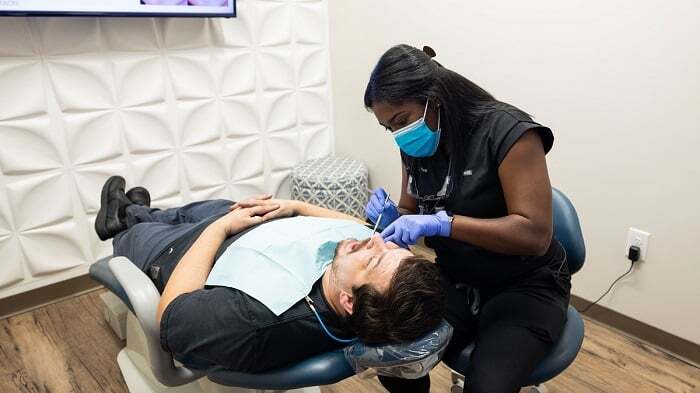
At 901 Dental, patients from Memphis and surrounding communities can receive same-day emergency appointments. The practice offers emergency treatment and extractions, with Dr. Alexandria Ellzey and her team evaluating the tooth before determining the most appropriate treatment.
This matters because the goal of an emergency appointment is not simply to remove a painful tooth. It is to identify the source of the pain, control the immediate problem, and determine what the tooth needs next.
If you are looking for a walk-in emergency dentist near you, call ahead whenever possible. Tell the dental team exactly what happened, how severe the pain is, whether you have swelling, and whether the tooth was injured. That information can help the office determine how quickly you should be seen.
Does severe tooth pain mean the tooth has to come out?
No.
Deep decay can irritate or infect the pulp, the living tissue inside the tooth. A crack or trauma can also damage the pulp. In some cases, the tooth can be treated with root canal therapy and restored rather than removed. Root canal treatment is specifically designed to eliminate infection or inflammation inside a tooth while preserving the natural tooth.
Extraction becomes more likely when the tooth is too damaged to restore, has a fracture that makes long-term repair unrealistic, or cannot be predictably saved.
That is why a dentist may take an X-ray, examine the gums and surrounding tissues, check how the tooth responds to pressure or temperature, and ask about how the pain started. The answer is based on what is happening inside and around the tooth, not just how much it hurts.
What happens during a same-day emergency visit?
You do not need to walk into the office knowing exactly what treatment you need.
The visit generally starts with an examination and, when appropriate, dental imaging. Your dentist will look for the source of the pain and determine whether the tooth is restorable.
If extraction is the right choice, the area is numbed before the tooth is removed. Your dentist will then give you instructions for protecting the extraction site while it heals.
If the tooth can be saved, you may instead be offered treatment such as root canal therapy or another restorative procedure. The American Association of Endodontists recommends considering tooth-saving options when they are clinically appropriate because natural teeth generally provide advantages over replacement teeth.
In other words, “emergency extraction” should not mean “automatic extraction.”
What if swelling or infection is involved?
Swelling deserves attention, particularly when it is getting larger or accompanied by worsening pain.
A dental infection can develop when bacteria reach the inner portion of a tooth or surrounding tissues. An abscess may cause pain, swelling, tenderness, drainage, or a bad taste in the mouth.
Antibiotics alone do not usually eliminate the source of most dental infections. The American Dental Association recommends prioritizing appropriate dental treatment, such as drainage, root canal treatment, or extraction when indicated, rather than relying on antibiotics for most localized dental pain and swelling. Antibiotics may be appropriate when systemic involvement, such as fever or malaise, is present.
Do not wait for swelling to become severe before calling.
If swelling is spreading into the face or neck, or you are having trouble breathing or swallowing, seek emergency medical care immediately. Those symptoms can indicate a potentially serious infection affecting the airway.
What should you avoid while waiting for dental care?
When a tooth hurts, it is tempting to try anything that might make the pain stop. Some common approaches can make the situation worse.
Avoid:
- Putting aspirin directly on the tooth or gums
- Trying to pull a loose or broken tooth yourself
- Using sharp objects to clean around the tooth
- Ignoring increasing facial swelling
- Taking leftover antibiotics without professional guidance
- Waiting several days because pain temporarily improves
A temporary reduction in pain does not necessarily mean the underlying problem has resolved.
Instead, gently rinse your mouth with warm water and keep the area clean. If food is trapped between teeth, gently floss around the area. For pain, follow the directions on any over-the-counter medication you normally can take safely, or ask your dentist or healthcare professional what is appropriate for you. The ADA advises against placing aspirin directly on painful tooth or gum tissue.
Is it better to pull the tooth or save it?
That depends on the condition of the tooth.
A dentist may recommend saving it when there is enough healthy tooth structure and the damage can be predictably treated. Extraction may be the better option when the tooth is severely fractured, extensively damaged by decay, or otherwise unlikely to function well after treatment.
There is also a practical consideration: removing a tooth solves the immediate problem, but the missing tooth may eventually need to be replaced. Depending on the location and your needs, options may include a dental implant, bridge, or denture.
That is why it is worth asking one simple question before extraction:
“Can this tooth be saved, and if so, what would that involve?”
A good emergency dental visit should give you a clear answer rather than leave you guessing.
How 901 Dental Approaches Emergency Tooth Problems
Dr. Alexandria Ellzey is a Memphis native who has practiced in the Memphis area and now leads 901 Dental in Arlington. Her approach emphasizes patient education, comfort, and personalized treatment, with experience that includes emergency care, endodontics, digital dentistry, and oral surgery.
At 901 Dental, the focus is on helping patients understand what is happening before moving forward with treatment. For someone who arrives worried about a painful tooth, that conversation can be just as important as the procedure itself.
Need Urgent Dental Care in the Memphis Area?
When a tooth suddenly becomes painful, you do not have to figure out the diagnosis on your own. Our team at 901 Dental can examine the tooth, explain what is causing the problem, and help you understand whether extraction or another treatment is the better next step.
If you are dealing with severe tooth pain, a broken tooth, swelling, or another urgent dental problem, contact 901 Dental to ask about a same-day emergency appointment.
FAQs About Emergency Tooth Extraction
Can I get a tooth pulled the same day in Memphis?
Possibly. Same-day treatment depends on the dental problem, your health history, the complexity of the extraction, and the office’s availability. 901 Dental offers same-day emergency appointments and extraction services.
What are the biggest signs I need emergency dental care?
Severe or worsening pain, facial or gum swelling, a dental abscess, a badly broken tooth, uncontrolled bleeding, or significant dental trauma are reasons to seek prompt evaluation. Difficulty breathing or swallowing requires immediate medical attention.
Can an infected tooth be pulled during an emergency visit?
It can be, depending on the infection and the condition of the tooth. Your dentist will determine whether extraction, root canal treatment, drainage, or another approach is appropriate.
Can a broken tooth be saved instead of extracted?
Sometimes. The location and depth of the fracture, remaining tooth structure, and condition of the pulp and supporting tissues all matter. A dental examination and X-ray can help determine whether restoration or root canal treatment is realistic.
What if my tooth stops hurting before my appointment?
Still keep the appointment if you have had significant pain, swelling, or other warning signs. Dental pain can change even when the underlying problem remains.
Is a root canal always better than an extraction?
Not necessarily. A root canal can preserve a tooth that is restorable, but some teeth cannot be predictably saved. Your dentist should evaluate the tooth and explain both options when appropriate.
Should I go to the ER for severe tooth pain?
For most dental problems, a dentist is the appropriate first point of care because the underlying tooth problem needs dental treatment. However, go to an emergency department for potentially life-threatening symptoms such as difficulty breathing or swallowing, rapidly spreading facial or neck swelling, or other signs of a serious medical emergency.
How quickly should I seek care for a swollen tooth?
As soon as possible, especially when swelling is increasing, pain is severe, or you have fever or feel generally unwell. Dental infections can worsen when the underlying source is not treated.
